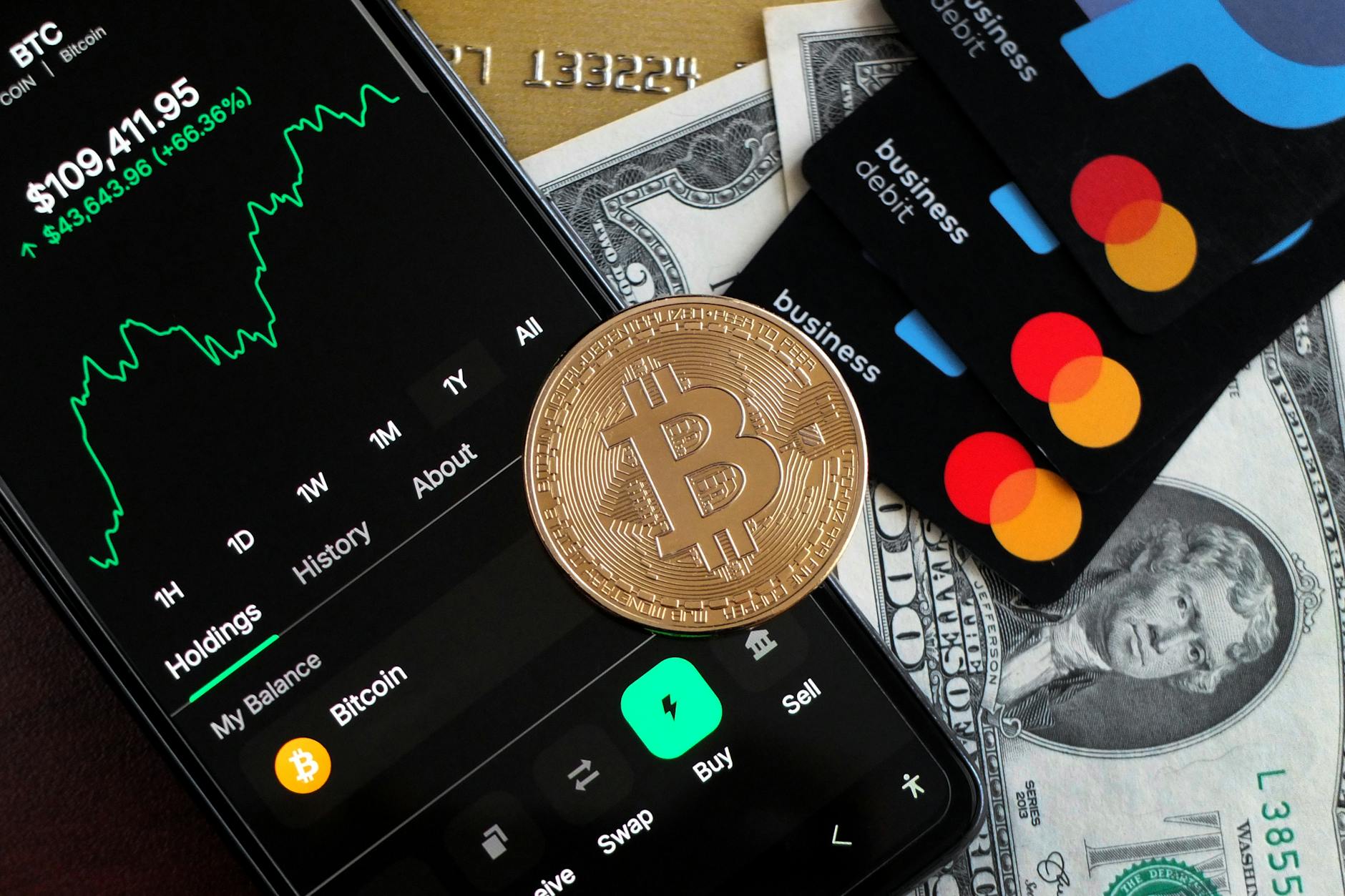

TL;DR: UPI is India’s dominant real-time payment system with 16+ billion monthly transactions and near-universal merchant acceptance. CBDC (Digital Rupee) is RBI’s government-backed digital currency, still in pilot phase but growing. For everyday payments in 2026, UPI wins on convenience. CBDC has long-term strategic advantages — but isn’t ready to replace UPI yet.
India’s digital payments story is one of the fastest in the world. UPI crossed ₹200 lakh crore in annual transaction value in 2025, and now powers everything from chai stalls to corporate payroll. Meanwhile, RBI’s Digital Rupee (e₹) quietly expanded its pilot across 16 cities — and the government is pushing harder than ever to make CBDC mainstream.
So which system should you actually care about as an Indian consumer, investor, or business owner in 2026? This comparison breaks down exactly how they work, where each wins, and what the future looks like — no jargon, no hype.
What Is UPI vs CBDC?
UPI (Unified Payments Interface) is a real-time interbank payment system developed by NPCI that lets users send and receive money instantly using a Virtual Payment Address (VPA), QR code, or mobile number — 24/7, 365 days a year.
Looking to buy or compare latest prices online? View verified deals, user reviews, and discounts directly on Amazon India:
CBDC (Central Bank Digital Currency), or the Digital Rupee (e₹), is a digital form of sovereign currency issued directly by the Reserve Bank of India. Unlike UPI — which moves money between bank accounts — CBDC IS money in digital form, with the same legal status as a ₹500 note in your wallet.
Think of it this way: UPI is a payment rail. CBDC is a new form of money that can travel on multiple payment rails, including UPI itself. Both are digital. Both are government-backed. But they are fundamentally different in design, purpose, and maturity.

Why This Debate Matters for India in 2026
India’s digital payment ecosystem is not a small experiment — it is a global benchmark. As of January 2026, UPI recorded over 16.73 billion transactions worth ₹23.48 lakh crore in a single month, according to NPCI’s official transaction data. That is a 40% year-on-year growth in transaction volume.
RBI’s Digital Rupee pilot, launched in December 2022, has expanded significantly. The retail e₹ pilot now covers 16 banks and over 50 lakh registered users as of Q1 2026, per RBI’s Annual Report 2025–26. The government has also set a target of 1 crore daily CBDC transactions — a benchmark that signals how seriously policymakers view this transition.
📊 Key stat: India’s digital payments market is projected to reach $10 trillion by 2026, per a NASSCOM-BCG report — making the UPI vs CBDC architecture question a trillion-dollar policy decision.
For the average Indian, this is not just a tech story. It affects how you save, spend, and transact. And for investors tracking fintech stocks or planning financial strategy, understanding this shift is increasingly important — just as tracking the right investment tools matters. ET Money is one of the better personal finance apps for mapping your digital spending habits and investment goals together in one dashboard.
How UPI Works: Step-by-Step
Step 1: Link Your Bank Account
You download a UPI-enabled app (PhonePe, Google Pay, Paytm, BHIM, or your bank’s app) and link it to your savings or current bank account. Your bank verifies your identity via your registered mobile number and debit card details.
Step 2: Create a VPA (Virtual Payment Address)
Your VPA — like yourname@oksbi or yourname@ybl — becomes your payment ID. You never need to share your account number or IFSC code again. This eliminates a major fraud vector.
Step 3: Send or Receive Money
Enter the recipient’s VPA, phone number, or scan their QR code. Enter the amount, authenticate with your UPI PIN, and the transaction settles in under 3 seconds directly between bank accounts. No intermediary wallet holds your money.
The architecture is elegant: NPCI acts as the central switch, routing transactions between banks. Your money stays in your bank account until the moment of transfer — making UPI structurally safer than mobile wallets.
How CBDC (Digital Rupee) Works: Step-by-Step
Step 1: Open a CBDC Wallet
You download your participating bank’s CBDC wallet app (currently available via SBI, HDFC, ICICI, Kotak, and 12 other banks). The wallet is linked to your KYC-verified bank account but holds e₹ tokens, not account balances.
Step 2: Load e₹ Tokens
You convert regular rupees from your bank account into e₹ tokens. These tokens are stored in your CBDC wallet — directly issued by RBI, not by your bank. If your bank collapses, your e₹ tokens remain valid because they are central bank liabilities, not commercial bank liabilities.
Step 3: Transact Using e₹
You pay using QR codes or token transfers. Critically, CBDC supports offline transactions — you can pay even without an internet connection, using NFC or Bluetooth, a feature UPI currently cannot offer reliably. This is a game-changer for rural India and areas with poor connectivity.
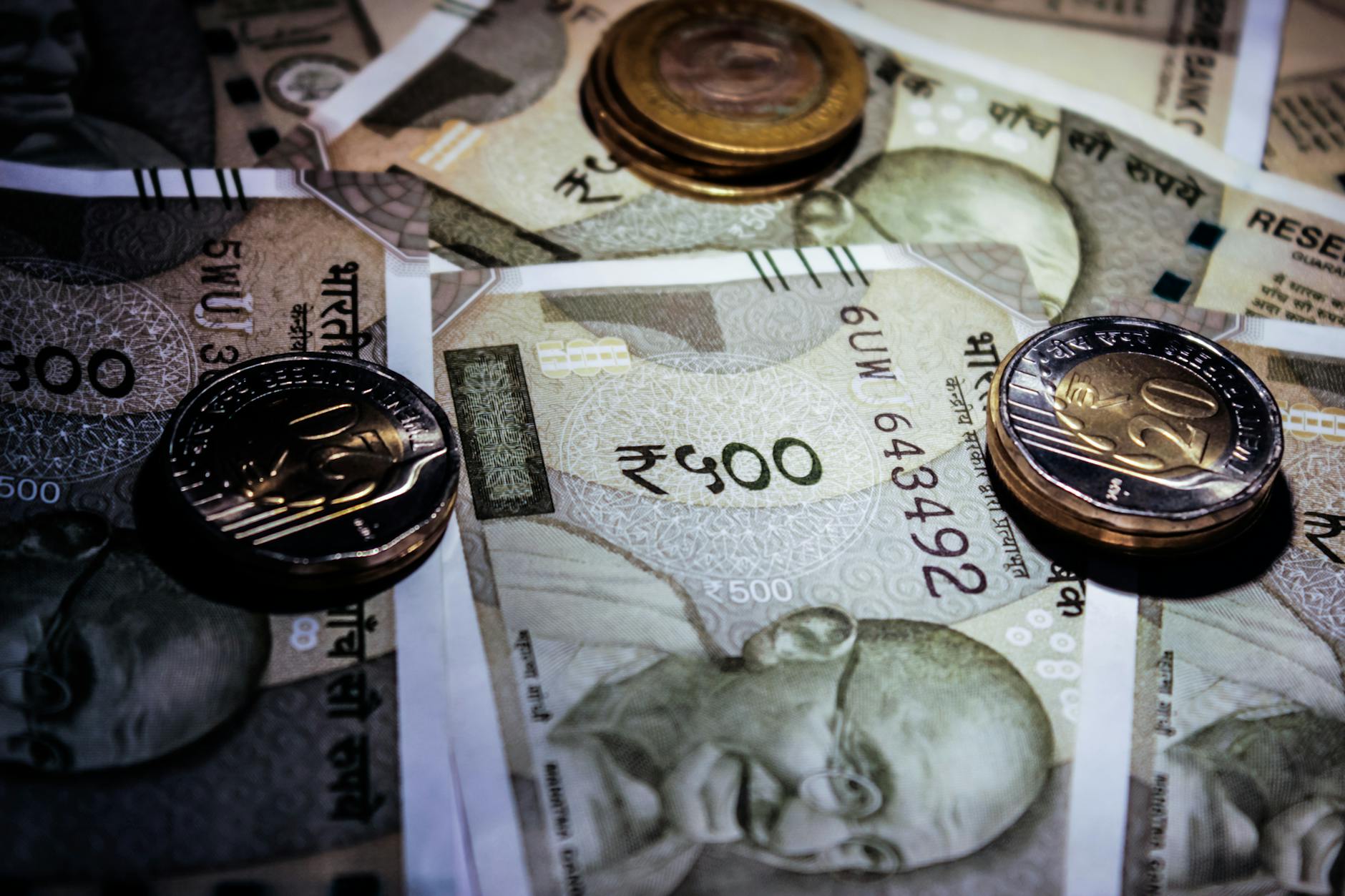
UPI vs CBDC: Quick Comparison
| Feature | UPI | CBDC (Digital Rupee) |
|---|---|---|
| Issuer | NPCI (banking network) | RBI (central bank directly) |
| What moves | Account balance transfer | Digital currency tokens |
| Bank dependency | Yes — needs active bank account | No — works without bank account |
| Offline payments | ❌ Limited/unreliable | ✅ Supported (NFC/Bluetooth) |
| Transaction cost | ₹0 for P2P, small MDR for merchants | ₹0 (no MDR planned) |
| Interest earned | Yes (stays in bank account) | No (like holding cash) |
| Anonymity | Partial (bank knows all) | Higher (token-based) |
| Daily limit | ₹1–5 lakh (varies by bank) | ₹10,000–₹2 lakh (pilot limits) |
| Merchant adoption | ✅ 5+ crore merchants | ❌ Very limited (pilot stage) |
| Programmability | ❌ No | ✅ Yes (conditional payments) |
| Internet required | ✅ Yes | Partially — offline mode exists |
| Maturity | Production-ready | Pilot stage (expanding) |
Best Use Cases: Where Each System Wins in India
1. Everyday Urban Payments — UPI Wins
With 5+ crore merchant QR codes deployed across India and seamless integration with every major app, UPI is the undisputed king for urban day-to-day payments. Paying for groceries, autos, restaurants, or online shopping — UPI is faster, more familiar, and universally accepted. There is no realistic alternative for this use case in 2026.
2. Rural and Low-Connectivity Areas — CBDC Has the Edge
India’s rural connectivity gap is real. CBDC’s offline transaction capability — where e₹ tokens can be exchanged via NFC without internet — directly addresses this. RBI has specifically designed the retail e₹ for financial inclusion in Tier 3 and Tier 4 towns. This is CBDC’s most compelling advantage over UPI right now.
3. Government Subsidy Distribution — CBDC Is Superior
Programmable money is CBDC’s killer feature. The government can issue e₹ tokens that are only spendable on food or fuel — eliminating subsidy leakage. This is already being tested in RBI’s wholesale CBDC pilot for inter-bank settlements. For DBT (Direct Benefit Transfer) schemes like PM Kisan or MGNREGS, CBDC offers precision UPI cannot match.
4. Cross-Border Remittances — CBDC Is the Future
India receives the world’s largest remittance inflows — over $125 billion in 2025, per World Bank data. UPI is expanding internationally (Singapore, UAE, France), but CBDC-to-CBDC cross-border settlement eliminates forex intermediaries entirely. Project Nexus (BIS-led, India is a participant) is building this infrastructure now.
5. Investment and Savings Behavior — UPI Wins Currently
If you are already investing through platforms like Zerodha or tracking your portfolio on Groww, UPI is the payment backbone for all your SIP mandates, fund purchases, and stock buying. CBDC wallets, unlike UPI-linked bank accounts, do not earn interest — so parking money in a CBDC wallet has an opportunity cost UPI users do not face.
How to Make Money Understanding This Shift in 2026
The UPI-to-CBDC transition is not just a payments story — it is a fintech investment thesis, a policy consulting opportunity, and a business positioning play.
Fintech founders and developers who build CBDC-compatible payment interfaces early will have first-mover advantage as RBI scales the pilot. NPCI and RBI have published open APIs for the retail e₹.
Investors should watch companies building on CBDC rails — payment processors, compliance tech firms, and rural fintech companies stand to benefit most. For tracking Indian fintech stocks and building a diversified portfolio around this theme, Zerodha remains India’s most cost-efficient platform for direct equity investments.
Content creators, educators, and bloggers who explain CBDC to mainstream India are tapping one of the least-crowded, highest-intent niches in Indian fintech education today.
💡 Pro tip: Understanding AI-powered financial tools gives you a serious edge in navigating India’s evolving fintech landscape. Our Top 50 AI Tools to Make Money (PDF) covers AI tools for finance, investing, content creation, and more — at just ₹199 to ₹499. Thousands of Indian creators and investors use it as their go-to reference.
For deeper reading on India’s digital payments regulatory framework, SEBI’s fintech policy page and RBI’s CBDC FAQ are the most authoritative sources available.
You can also explore our guide on how to manage personal finance with AI tools and our breakdown of best investment platforms for Indian beginners on 99InfoStore.
Frequently Asked Questions
Q: Can I use CBDC (Digital Rupee) for UPI payments in 2026?
A: Yes, partially. RBI has enabled e₹ wallet transactions via UPI QR codes in its pilot. However, full interoperability between CBDC wallets and all UPI apps is still being rolled out. Expect broader compatibility by late 2026, per RBI’s roadmap.
Q: Is the Digital Rupee (e₹) safe to use? Can RBI track my transactions?
A: The Digital Rupee is as safe as holding physical cash. RBI has partial visibility into token flows, but retail e₹ is designed for higher anonymity than bank transfers. For large transactions, KYC traceability exists — similar to current banking norms under PMLA guidelines.
Q: Does UPI charge any transaction fees for individuals in India?
A: UPI P2P (person-to-person) transactions are completely free. Merchants pay a Merchant Discount Rate (MDR) of 0%–0.3% on P2M (person-to-merchant) transactions above ₹2,000 via credit card-linked UPI. For debit-linked UPI, MDR is currently zero — a government mandate.
Q: Will CBDC replace UPI in India?
A: No, at least not in the near term. RBI has stated both systems will coexist. UPI handles payment rails; CBDC introduces a new form of money. They are complementary, not competing. Expect CBDC to supplement UPI for specific use cases like offline payments and government transfers by 2027–28.
Q: Which is better for rural India — UPI or CBDC in 2026?
A: CBDC currently has the structural advantage for rural India due to its offline transaction capability via NFC and Bluetooth. Rural areas with poor internet connectivity cannot reliably use UPI. RBI’s e₹ pilot specifically targets Tier 3 and Tier 4 districts for this reason.
Conclusion
In 2026, UPI and CBDC are not rivals — they are two different layers of India’s digital financial infrastructure. UPI is the proven, production-grade payment rail that 35+ crore active Indians use daily. CBDC is the emerging programmable money layer that will redefine how subsidies flow, how offline payments work, and how India integrates into global CBDC networks.
If you are an everyday user: stick with UPI. It is faster, universally accepted, and completely free. If you are a fintech builder, policy watcher, or long-term investor: start paying serious attention to CBDC — because RBI’s 1-crore-daily-transactions target signals that this is not a side project.
The smartest move is to understand both deeply. Start with our resource on best AI and finance tools for Indian professionals to stay ahead of every digital money shift coming to India.
📥 Want to go deeper? Get our Top 50 AI Tools to Make Money (PDF) — ₹199 to ₹499. Curated for Indian creators, investors, and professionals navigating India’s fast-changing digital economy.
⚡ Join our VIP Telegram for Daily 70–90% Loot Deals: Don’t miss instant Amazon & Flipkart price drops, verified tech discounts, and lightning sales! 👉 Join @offers99infostore Free on Telegram ↗




![Best Diwali Gift Ideas Under ₹1000 in India (2026): Useful Tech & Festive Hampers [Top 10 Picks] - 99InfoStore Festive Tech Gift Guide](https://99infostore.com/wp-content/uploads/2026/10/best-diwali-gifts-under-1000-india-2026-260x140.jpg)
![Dhanteras 2026 Silver Buying: Hallmarking Rules, Rates & Pure Coins Guide [With Calculator] - 99InfoStore Festive Finance Guide](https://99infostore.com/wp-content/uploads/2026/10/dhanteras-2026-silver-buying-guide-260x140.jpg)