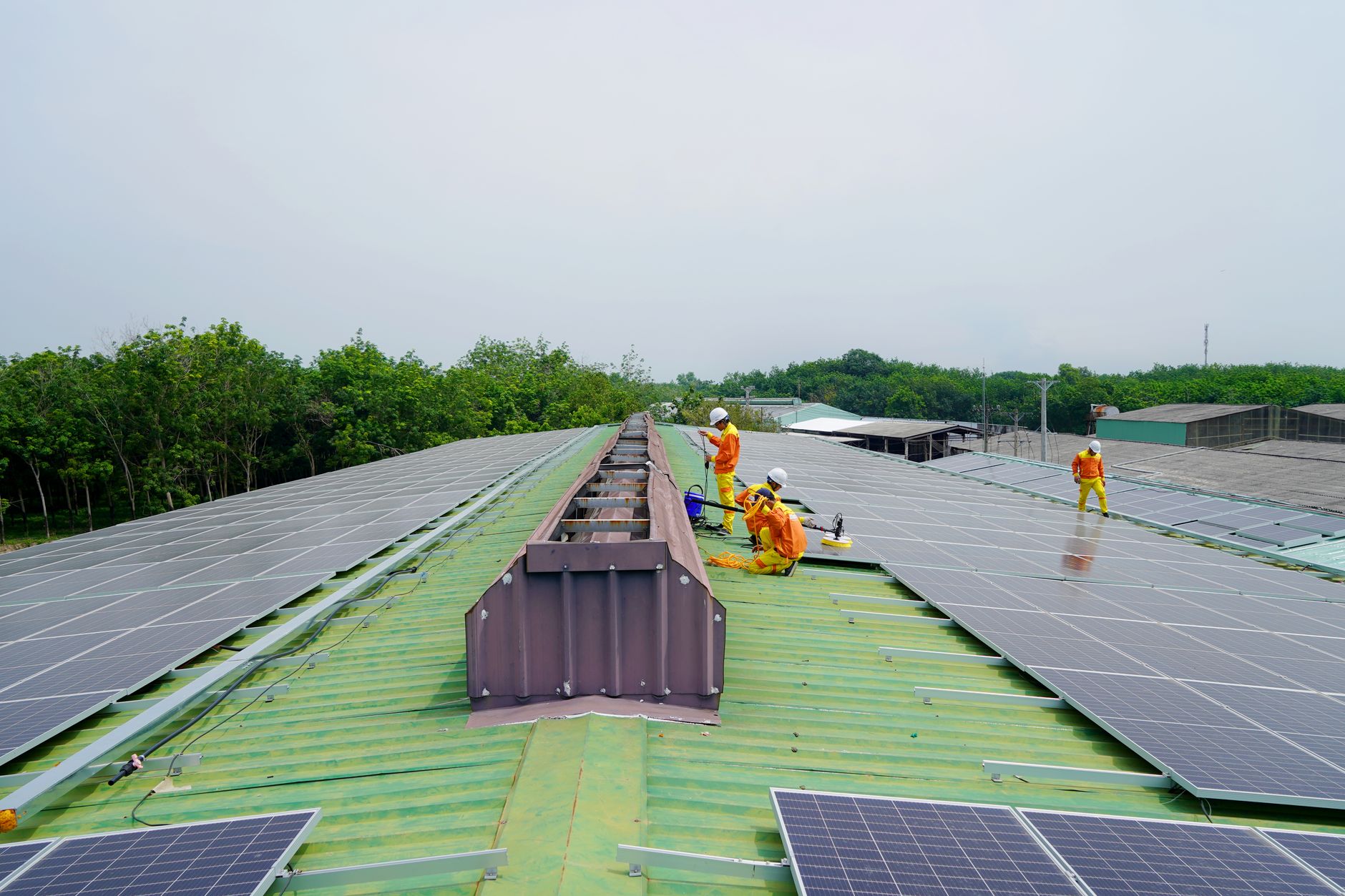
TL;DR: Under the PM Surya Ghar: Muft Bijli Yojana, residential households in India can claim a direct central government subsidy of ₹30,000 for 1 kW, ₹60,000 for 2 kW, and up to ₹78,000 for 3 kW rooftop solar systems. Households consuming up to 300 units of electricity per month can reduce their monthly power bills to ₹0. With concessional bank loans starting at 7% interest and an average payback period of under 4 years, here is the complete cost breakdown, subsidy calculation, and step-by-step registration guide for 2026.
With electricity tariffs climbing across Indian states, rooftop solar power has shifted from an eco-friendly luxury to a practical financial investment for middle-class homeowners.
Launched with an outlay of ₹75,021 crore to power 1 crore homes, the PM Surya Ghar Muft Bijli Yojana offers upfront capital assistance paid directly to your bank account via Direct Benefit Transfer (DBT).
In this practical handbook, we break down how the subsidy is calculated for 1kW, 2kW, and 3kW setups, actual system installation costs, monthly units generated, concessional solar loans, and the step-by-step national portal process.
⚡ PM Surya Ghar Subsidy Structure (2026 Official Slabs)
The Ministry of New and Renewable Energy (MNRE) provides a tiered financial assistance model based on rooftop plant capacity:
| Solar Plant Capacity | Central Subsidy Amount | Average Benchmark Cost (Total) | Net Out-of-Pocket Expense | Monthly Energy Generation | Ideal Household Monthly Consumption |
|---|---|---|---|---|---|
| 1 kW System | ₹30,000 | ₹60,000 – ₹65,000 | ₹30,000 – ₹35,000 | 120 – 130 Units | 100 – 150 Units |
| 2 kW System | ₹60,000 | ₹1,20,000 – ₹1,30,000 | ₹60,000 – ₹70,000 | 240 – 260 Units | 150 – 250 Units |
| 3 kW System | ₹78,000 | ₹1,80,000 – ₹2,05,000 | ₹1,02,000 – ₹1,27,000 | 360 – 390 Units | 250 – 350 Units |
| Above 3 kW (e.g., 5 kW) | ₹78,000 (Capped) | ₹2,80,000 – ₹3,20,000 | ₹2,02,000 – ₹2,42,000 | 600 – 650 Units | 500+ Units / Heavy AC usage |
💡 Important Cap Rule: The central subsidy reaches its statutory maximum at ₹78,000 for any system 3 kW or larger. If you install a 4 kW, 5 kW, or 10 kW rooftop system, the maximum central financial assistance remains fixed at ₹78,000. However, some states (such as Uttar Pradesh and Gujarat) provide additional state top-up subsidies.
📊 Detailed Cost & Savings Breakdown: 2kW vs 3kW Systems

Choosing between a 2 kW and a 3 kW solar array depends on your monthly power consumption and available shadow-free rooftop area.
1. The 2 kW Rooftop Solar System (Small to Mid Households)
- Target Audience: Families with 1 refrigerator, 3-4 fans, LED lighting, TV, washing machine, and occasional 1-ton inverter AC usage.
- Rooftop Area Required: Approx. 180 to 200 sq. ft. of unshaded roof.
- Monthly Power Generated: ~240 units (kWh).
- Gross Hardware & Installation Cost: ₹1,25,000
- Direct Central Subsidy: -₹60,000
- Net Customer Investment: ₹65,000
- Annual Electricity Bill Savings (@ ₹7.50/unit): ₹21,600 / year
- Estimated Payback Period: ~3.0 years
2. The 3 kW Rooftop Solar System (High Consumption / Regular AC Usage)
- Target Audience: Independent houses or villas running two 1.5-ton ACs, microwave, induction/geyser, and EV 2-wheeler charging.
- Rooftop Area Required: Approx. 270 to 300 sq. ft. of unshaded roof.
- Monthly Power Generated: ~360 to 390 units (kWh).
- Gross Hardware & Installation Cost: ₹1,90,000
- Direct Central Subsidy: -₹78,000
- Net Customer Investment: ₹1,12,000
- Annual Electricity Bill Savings (@ ₹8.00/unit): ₹35,500 / year
- Estimated Payback Period: ~3.1 years
After your initial payback period of ~3 years, the electricity generated by the panels for the remaining 22+ years of the panel’s warranted lifespan is virtually 100% free profit.
🏦 Low-Interest Collateral-Free Solar Loans (SBI & Canara Bank)
To ensure zero financial burden, public sector banks offer collateral-free rooftop solar loans tied to the PM Surya Ghar national portal:
- State Bank of India (SBI Surya Ghar Loan):
* Interest Rate: 7.00% p.a. (pegged 0.50% above prevailing EBLR).
* Loan Amount: Up to ₹2,00,000 for up to 3 kW capacity (minimum 10% margin money).
* Collateral: Zero collateral required; no mortgage on residential property.
* Repayment Tenure: Up to 10 years (120 months) with flexible prepayments.
- EMI Calculation: On a net loan of ₹1,00,000 for a 3kW system over a 5-year tenure, the monthly EMI is roughly ₹1,980, which is lower than the average monthly electricity bill saved!
📝 Step-by-Step Application Process on pmsuryaghar.gov.in
Follow this verified roadmap to prevent documentation rejections and secure your subsidy within 30 days of grid commissioning:
Step 1: Portal Registration
- Visit the official portal: pmsuryaghar.gov.in.
- Select your State, Electricity Distribution Company (DISCOM), and enter your Consumer Account Number (found on your electricity bill).
- Verify your Mobile Number via OTP and enter your active email ID.
Step 2: Feasibility Approval & Vendor Selection
- Log in using your registered mobile number and apply for Rooftop Solar installation.
- Enter your sanctioned load and desired plant capacity (e.g., 2 kW or 3 kW).
- The local DISCOM reviews technical grid feasibility and issues approval online.
- Select any registered, empanelled vendor in your district through the portal. Ensure they use DCR-compliant (Domestic Content Requirement) bifacial or mono-PERC solar panels to remain eligible for subsidy.
Step 3: Installation & Inspection
- The empanelled vendor installs the mounting structure, solar modules, and grid-tied inverter.
- Once installed, submit work completion details on the portal.
- The DISCOM inspector conducts site verification and installs a bi-directional Net Meter.
Step 4: Commissioning Certificate & Subsidy Release
- After net meter commissioning, the DISCOM issues an online Commissioning Certificate.
- Submit your bank account details and upload a cancelled cheque on the PM Surya Ghar portal.
- The central subsidy (₹60,000 or ₹78,000) is credited directly to your bank account within 30 days.
⚠️ 3 Critical Mistakes That Delay Subsidy Payouts
- Purchasing Non-DCR Solar Modules: To claim the central subsidy, MNRE mandates that both solar cells and modules must be manufactured domestically in India (ALMM List I approved). If your installer uses cheap imported panels, your claim will be rejected instantly.
- Name Mismatch on Electricity Bill vs Bank Account: The name on your electricity connection, Aadhaar card, and bank account passbook/cheque must match. If there is a spelling disparity, complete a name update on your DISCOM portal before applying.
- Exceeding Sanctioned Load Limits: Your proposed solar plant capacity cannot exceed your sanctioned load with the DISCOM. If your current sanctioned load is 1 kW and you wish to install a 3 kW solar system, apply for an online load enhancement with your DISCOM first.
❓ Frequently Asked Questions (FAQ)
Can I install a rooftop solar system if I live in a rented apartment or flat?
Individual apartment tenants cannot apply directly unless they own independent roof rights. However, Group Housing Societies (GHS) and Resident Welfare Associations (RWAs) can claim subsidies up to ₹18,000 per kW (up to 500 kW capacity) for common area lighting, lifts, and water pumping systems.
What is the lifespan and maintenance cost of a 3kW solar system?
Tier-1 Mono-PERC and TOPCon solar panels come with a 25-year performance warranty (guaranteeing at least 80% output efficiency at Year 25). Grid-tied inverters typically carry a 5 to 10-year warranty. Maintenance involves simply washing dust and bird droppings off the glass panels with plain water twice a month.
Do solar panels work during rainy days and winter months?
Yes. Solar panels generate power from ambient daylight (photons), not heat. While generation drops by 40% to 60% on heavily overcast or rainy days, your home seamlessly draws deficit electricity from the state grid through net metering.
What happens to the excess solar electricity generated when I am away from home?
Under net metering, any surplus solar power generated during the afternoon is automatically exported to the DISCOM grid. The bi-directional meter records these export credits, which are deducted from your night-time grid consumption on your monthly electricity bill.
"}}]}








1 comment
📥 Get our “Top 50 AI Tools to Make Money (PDF)” — ₹199 – ₹499 at https://99infostore.com/product/top-50-ai-tools-pdf