
TL;DR: Poor sleep is harming millions of Indians — raising diabetes risk, tanking productivity, and damaging mental health. These 10 science-backed tips covering sleep schedules, light exposure, diet, and bedroom environment can add 60–90 minutes of quality sleep per night within two weeks.
India has a sleep crisis hiding in plain sight. A 2026 report by the Indian Sleep Disorders Association found that 93% of Indian adults are sleep-deprived, averaging just 6.1 hours per night against the recommended 7–9 hours. The consequences — poor memory, weakened immunity, higher cardiovascular risk — are well-documented and entirely preventable.
The good news: you do not need sleeping pills or expensive gadgets. The science of sleep hygiene has matured enough that behavioural changes alone can transform your nights. This guide covers exactly what works, why it works, and how to implement it starting tonight.
What Is Sleep Hygiene?
Sleep hygiene is the collection of behavioural and environmental practices that promote consistent, high-quality sleep and full daytime alertness.
Looking to buy or compare latest prices online? View verified deals, user reviews, and discounts directly on Amazon India:
Think of it less as a routine and more as a set of conditions your brain needs to shift from wakefulness into deep, restorative sleep. Your nervous system is not a light switch — it is a dimmer. Sleep hygiene is the process of slowly turning that dimmer down at the right time, every night. Poor sleep hygiene means your dimmer gets stuck: your brain stays alert long after you want it to shut off.
The science here is built on decades of sleep medicine research. The American Academy of Sleep Medicine, the National Sleep Foundation, and India’s own NIMHANS (National Institute of Mental Health and Neuro Sciences) have all published guidelines converging on the same core behaviours. These are not wellness influencer tips — they are clinically validated interventions.

Why Sleep Deprivation Matters in India in 2026
India ranks among the most sleep-deprived nations in the world. A 2026 global sleep study by Philips Healthcare placed India third globally for chronic sleep deprivation, behind only Japan and South Korea.
The economic cost is staggering. The RAND Corporation estimated that sleep deprivation costs India approximately $194 billion (roughly ₹16 lakh crore) in lost productivity annually — making it a public health emergency, not a personal lifestyle issue. Beyond the economy, chronic sleep loss raises your risk of Type 2 diabetes by 50%, according to research published in The Lancet in 2025.
📊 Key stat: 93% of Indian adults sleep fewer than 7 hours per night, well below the WHO-recommended minimum of 7 hours for adults — Indian Sleep Disorders Association, 2026.
Urban Indians face compounding factors: late-night screen use driven by cheap mobile data, irregular work-from-home schedules since the remote work boom, and rising anxiety around job security in a competitive economy. The tips below directly address these Indian-specific triggers.
You can also explore our complete guide to mental wellness and productivity tools for more resources tailored to Indian professionals.
10 Science-Backed Tips to Sleep Better in 2026
Tip 1: Fix Your Wake-Up Time First
Most sleep advice starts with bedtime. That is backwards. Your circadian rhythm — the 24-hour internal clock governed by the suprachiasmatic nucleus in your brain — anchors itself to your wake-up time, not when you go to bed.
Set a consistent wake-up alarm, including weekends. Within 10–14 days, your brain will automatically begin feeling sleepy 7–8 hours before that alarm. Start here before changing anything else. Yes, this means no sleeping in on Sunday.
Tip 2: Get Bright Light in the First 30 Minutes of Waking
Sunlight exposure in the morning suppresses melatonin and spikes cortisol at the right time — signalling to your body that the day has begun. This makes your evening melatonin release earlier and stronger, meaning you feel genuinely sleepy at the right hour.
Step outside for 10–15 minutes within 30 minutes of waking. In Indian cities where air quality or heat is a concern, even standing near an open east-facing window works. This single habit, studied extensively by Stanford neuroscientist Dr. Andrew Huberman, is consistently ranked the highest-impact sleep intervention.
Tip 3: Stop Caffeine After 2 PM
Caffeine has a half-life of 5–7 hours. A cup of chai or coffee at 4 PM still has half its caffeine circulating in your bloodstream at 10 PM, directly blocking adenosine receptors — the brain’s sleepiness signal.
If you sleep at 11 PM and your last chai was at 5 PM, you are fighting your own nervous system. Move your last caffeinated drink to before 2 PM. Green tea counts. Cold coffee counts double. Your sleep quality — specifically deep sleep percentage — will measurably improve within 3 days.
Tip 4: Keep Your Bedroom Below 26°C
Your core body temperature must drop 1–2°C for you to fall and stay asleep. This is biology, not preference. A hot bedroom — a real problem across most of India from March through October — directly delays sleep onset and reduces REM sleep.
Use a ceiling fan, light cotton bedding, or a modest AC setting at 24–26°C. If AC costs are a concern, a wet towel on the feet (an old Indian household trick) genuinely works — it accelerates heat loss through peripheral blood vessels. Keep room temperature tracking simple with any basic room thermometer.
Tip 5: Eliminate Blue Light 90 Minutes Before Bed
Screens emit blue-wavelength light that suppresses melatonin production by up to 50%, according to Harvard Medical School research. Scrolling Instagram at 11 PM is neurologically equivalent to turning on a bright light — your pineal gland stops producing the sleep hormone.
Enable “Night Mode” or “Reading Mode” on your phone (available on all Android and iOS devices). Better still, stop screens entirely 60–90 minutes before bed. Replace that window with reading a physical book, light stretching, or listening to a podcast without looking at the screen.
Tip 6: Eat Dinner at Least 3 Hours Before Sleep
Digestion raises your core body temperature and keeps your metabolism active — the opposite of what sleep requires. Late dinners, a culturally common pattern in many Indian households where dinner is served at 9–10 PM, are directly linked to worse sleep quality and increased acid reflux at night.
Shift dinner to 7:30–8 PM where possible. If family schedules make this difficult, eat a lighter meal later and have a larger lunch. Avoid heavy dal-chawal or biryani as a late dinner. A small handful of walnuts or warm milk with turmeric 30 minutes before bed actually helps — both contain tryptophan, a precursor to melatonin.

Tip 7: Use the 4-7-8 Breathing Method to Fall Asleep Faster
Developed by Dr. Andrew Weil and rooted in pranayama tradition (which Indian readers will recognise as a form of structured breathwork), the 4-7-8 technique activates the parasympathetic nervous system — your rest-and-digest mode.
How to do it: Inhale for 4 counts → Hold for 7 counts → Exhale for 8 counts. Repeat 4 cycles. Clinical studies show this technique reduces time-to-sleep onset by an average of 7 minutes. It also reduces cortisol, the primary stress hormone that keeps millions of Indians lying awake running tomorrow’s to-do list through their heads.
Tip 8: Reserve Your Bed for Sleep Only
This is called stimulus control therapy — one of the most evidence-backed treatments in cognitive behavioural therapy for insomnia (CBT-I). If you work from your bed, watch TV in bed, or eat in bed, your brain stops associating the bed with sleep. It starts treating it as a general-purpose zone, making it harder to feel sleepy when you actually lie down to sleep.
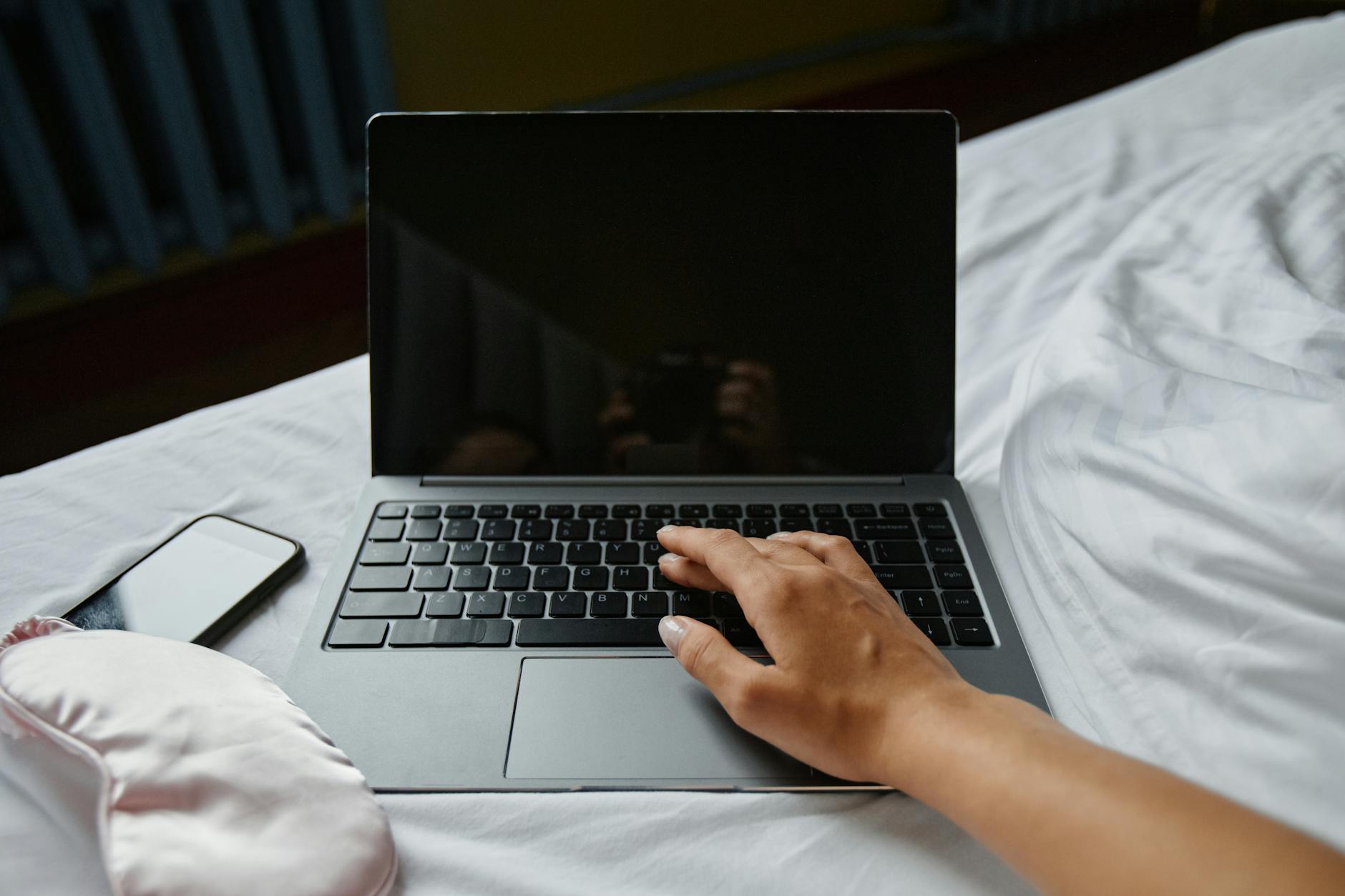
Simple rule: bed is for sleep and intimacy only. No laptops. No phones. No work calls propped against the headboard. Reinforce this rule for two weeks and your sleep-onset time will drop noticeably.
Tip 9: Exercise — But Not After 7 PM
Regular physical activity increases slow-wave (deep) sleep by up to 65%, per a meta-analysis in Sleep Medicine Reviews (2024). It also reduces cortisol over time, making your evenings calmer. But vigorous exercise within 3–4 hours of bedtime raises adrenaline and core temperature — delaying sleep onset.
Schedule your gym, run, or yoga session in the morning or before 7 PM. Even a 20-minute brisk walk after dinner at 8 PM is fine; it is intense HIIT and weightlifting that should be moved earlier. For those using apps like Cult.fit or HealthifyMe popular among Indian urban users, schedule evening sessions only as light yoga or stretching.
Tip 10: Track Your Sleep With a Simple Log
You cannot improve what you do not measure. The simplest version: a notebook beside your bed where you log bedtime, wake time, and a 1–10 quality rating each morning. Do this for 14 days and patterns become obvious — that Sunday chai at 6 PM, the late-night IPL match, the work deadline anxiety.
Wearables like the Noise ColorFit Ultra (₹4,999) or Fitbit Charge 6 (₹14,999) give you sleep stage data. But even a free app like Sleep Cycle (available on Android and iOS, free tier sufficient) provides actionable data. The goal is pattern awareness, not obsession over numbers.
For those building a health + productivity stack, check out our top productivity tools guide for Indian professionals to pair your sleep improvement with smarter daytime output.
Sleep Aids vs Behavioural Changes: Quick Comparison
| Factor | Behavioural Changes (This Guide) | Sleep Medications |
|---|---|---|
| Cost | ₹0 | ₹50–₹500/month |
| Onset of results | 7–14 days | 1 night |
| Long-term effectiveness | ✅ Permanent | ❌ Tolerance builds |
| Side effects | None | Drowsiness, dependency risk |
| Addresses root cause | ✅ Yes | ❌ No |
| India accessibility | ✅ Universal | Requires prescription |
| Recommended by NIMHANS | ✅ Yes | Only for clinical cases |
Behavioural change wins every category except speed. If you need fast relief for a specific high-stress event, consult a doctor. For lasting improvement, this guide is your path.
Frequently Asked Questions
Q: How many hours of sleep do adults in India actually need per night?
A: Adults need 7–9 hours of sleep per night, according to the WHO and the Indian Sleep Disorders Association. Most Indian adults average only 6.1 hours. Consistently sleeping fewer than 7 hours raises diabetes and cardiovascular disease risk by over 50%.
Q: Can a 20-minute afternoon nap improve sleep quality without disrupting night sleep?
A: Yes — a nap under 25 minutes before 3 PM improves alertness without affecting night sleep. Naps longer than 30 minutes enter deep sleep, causing grogginess and making it harder to fall asleep at night. Set a strict alarm.
Q: Does drinking warm milk with turmeric (haldi doodh) actually help you sleep?
A: Yes. Milk contains tryptophan, which the body converts to serotonin and then melatonin. Turmeric has anti-inflammatory properties that reduce cortisol. One cup 30 minutes before bed has mild but measurable sleep-onset benefits, supported by nutritional sleep research.
Q: What is the best room temperature for sleeping in Indian summers?
A: The optimal sleep temperature is 18–22°C globally, but for India’s climate, 24–26°C is practical and effective. Use a ceiling fan, light cotton sheets, and keep windows open for airflow. Cooling your feet with a damp cloth also accelerates sleep onset.
Q: Can using AI tools or screens for work late at night affect sleep quality?
A: Yes — screen blue light suppresses melatonin by up to 50%. If late-night work is unavoidable, enable Night Mode on all devices and wear blue-light-blocking glasses. Stopping screens 90 minutes before sleep remains the most effective protection.
Conclusion
Sleep is not a passive activity — it is your brain’s most active period of repair, memory consolidation, and hormone regulation. The 10 tips above are not suggestions; they are evidence-based interventions that collectively can add 60–90 minutes of quality sleep within two weeks of consistent practice.
Start with just two: fix your wake-up time and stop caffeine after 2 PM. Those two changes alone will produce noticeable results in 5–7 days. Then layer in the rest. India’s productivity crisis, mental health epidemic, and rising rates of metabolic disease are all tied, in part, to chronically poor sleep. You have more control over this than you think.
For more tools that help Indian professionals build smarter, healthier, and more productive lives, explore our complete health and AI tools resource hub.
📥 Want to work smarter while sleeping better? Get our Top 50 AI Tools to Make Money (PDF) — starting at ₹199. Curated for Indian creators, freelancers, and professionals who want to build income without burning out.
⚡ Join our VIP Telegram for Daily 70–90% Loot Deals: Don’t miss instant Amazon & Flipkart price drops, verified tech discounts, and lightning sales! 👉 Join @offers99infostore Free on Telegram ↗








1 comment
📥 Get our “Top 50 AI Tools to Make Money (PDF)” — ₹199 – ₹499 at https://99infostore.com/product/top-50-ai-tools-pdf